What Cannabis Cultivators Can and Cannot Put Into COGS
Under §280E, cost of goods sold is the only federal deduction a cannabis grow gets — which means one question decides your tax bill: what can you legitimately put into COGS? Most boutique cultivators under-claim it, because they never capture the full set of §471-11 production costs the law lets them capitalize.

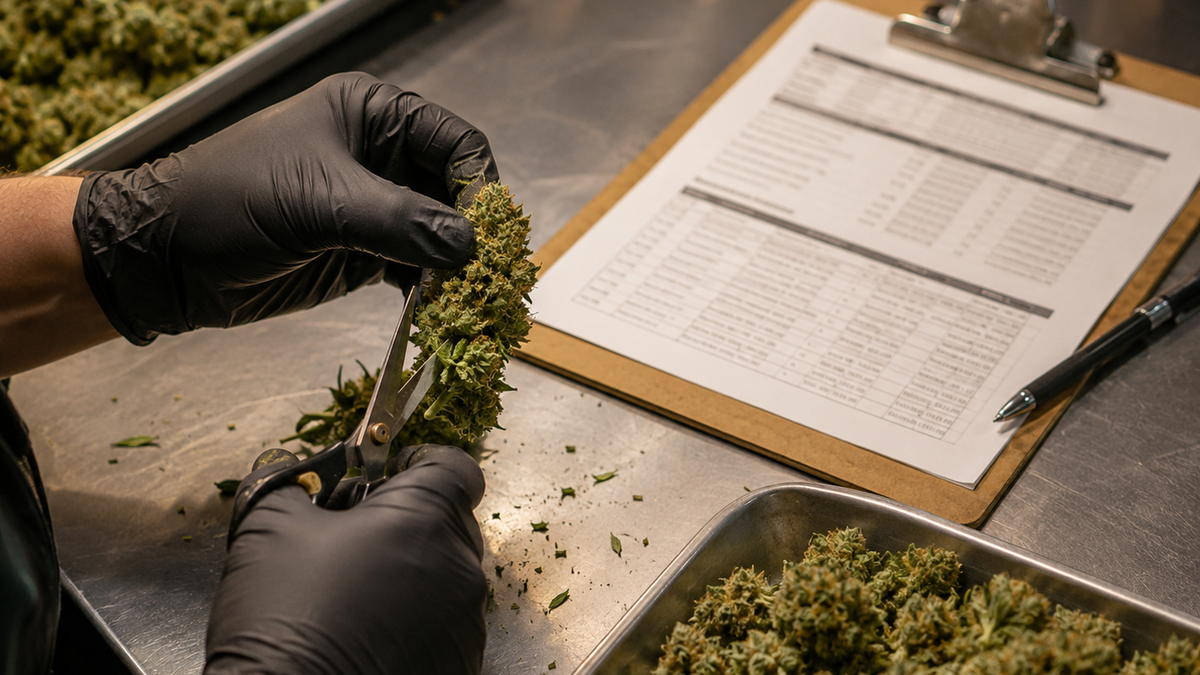
This one is for the boutique cultivator running something like ten thousand square feet of canopy who has been treating cost of goods sold as two line items — the plant and what you feed it — and nothing else. If that is your COGS schedule, you are almost certainly overpaying, and the reason is structural. §280E stripped away every ordinary business deduction a cannabis operator would otherwise get and left exactly one thing standing: COGS. So the entire federal tax question for a grow collapses into how much you can legitimately move into that one surviving bucket — and the answer is almost always more than a two-line schedule captures.
COGS is not a deduction — and that is the whole game
Here is the distinction that decides everything. §280E denies deductions under §162 — the ordinary and necessary business expenses — for any business trafficking in a Schedule I or II controlled substance. But cost of goods sold is not a §162 deduction. COGS is an adjustment to gross receipts under §471: it comes off before you ever reach the deductions §280E disallows. That is why COGS survived §280E when everything else did not. So the game for a cultivator is not to find clever deductions — §280E closed that door — it is to make sure every cost the law lets you capitalize into inventory actually lands in COGS.
Three provisions govern how you do that. §471(a) is the baseline: your inventory method has to clearly reflect income. §471(c), added by the 2017 tax act, lets a small producer — one under the §448 gross-receipts threshold (indexed, on the order of $29 million, but confirm the current figure at filing) — use a simplified inventory method, which I cover in its own guide in this library. And §471-11, the full-absorption regulation, is where the money hides: it requires a producer to capitalize indirect production costs into inventory, not just direct ones. Most cultivators know about direct costs. Most leave the indirect ones on the floor.
What you can put into COGS
Walk your operation through four buckets.
Direct materials. Seeds and clones, soil and growing media, nutrients, and the pest-control inputs consumed in production. The obvious ones — and usually the only ones a thin COGS schedule captures.
Direct labor. The wages of the people whose hands are on the plants: cultivation, harvest, curing, trimming, and packaging for sale. Not just the trimmers — everyone whose labor is directly tied to producing the product.
Indirect production costs — the big misses. This is the §471-11 layer, and it is where a properly built COGS schedule pulls away from a thin one. Rent allocable to production space. Utilities that run the grow — the lights, the water, the HVAC. Depreciation on cultivation equipment. Supervision and management of production labor. Quality control. Repairs and maintenance on production equipment. Insurance on production assets. Every one of these is a cost you are already paying, and §471-11 says the production share of it belongs in inventory.
Post-production handling to the point of sale. Storage, packaging, and labeling of finished product.
If a cost sits in one of those four buckets, full-absorption accounting lets you capitalize it into inventory, where it becomes COGS when the product sells — and COGS is the one number §280E cannot touch.
One more thing about how this actually saves you money: capitalized costs do not cut your tax the instant you incur them — they sit in inventory and come off as COGS when the product sells. For a grow with regular harvests and turns, that is a rhythm, not a delay. But it makes the discipline year-round: if you are not capturing indirect production costs into inventory as you go, you cannot recover them at the point of sale, because they were never in the inventory that sold.
What you cannot put into COGS
The other side of the line matters just as much, because putting the wrong costs into COGS is how you turn a quiet overpayment into a loud audit finding.
Selling, general, and administrative costs do not belong in COGS. Marketing and advertising. Sales commissions. Administrative salaries. Office rent. Software that is not part of production. General insurance not tied to production assets. These are §162 expenses, and how they are treated now depends on which side of your operation they support.
For the adult-use side, they are gone — §280E denies them outright, and they are permanently nondeductible. For the medical side, the picture changed in 2026: qualifying medical activity now sits outside §280E under current law, following the rescheduling of state-licensed medical marijuana to Schedule III, so those same §162 expenses can be deductible going forward — but only if your books actually segregate and allocate them between the medical and adult-use sides. You cannot deduct what you cannot show a split for. I walk through that split in The Medical-vs-Adult-Use Allocation. And treat the precise 2026 transition-year timing — how far back into the year the medical exemption reaches — as something to confirm against current IRS guidance before you file, rather than assume.
The mistakes that cost the most
Three patterns account for most of the overpayment I see in cultivation.
The first is expensing indirect production costs as overhead instead of capitalizing them into inventory. When rent, utilities, and depreciation get booked straight to operating expense, two bad things happen at once: your COGS is understated, and — on the adult-use side — those costs are lost entirely, because as SG&A they are disallowed. Capitalized into inventory, they survive.
The second is capitalizing only the trimmers' labor and stopping there. The growers, the cure-room staff, the people supervising production — their labor is capitalizable too, and leaving it out understates COGS every cycle.
The third is not carrying inventory at full-absorption cost. If your inventory is valued at direct cost only, then when it sells the COGS that comes off is understated, and the overpayment is baked in before you ever file.
A COGS checklist you can run this week
- Map every cost to one of four categories: direct materials, direct labor, indirect production, or SG&A.
- Capitalize all §471-11 indirect production costs into inventory — do not leave rent, utilities, depreciation, and production supervision sitting in operating expense.
- If you hold both licenses, allocate the shared indirect production costs between the medical and adult-use sides (see The Medical-vs-Adult-Use Allocation).
- Reconcile your COGS workpapers to the books and to your Metrc and POS inventory.
- Have the §471 method reviewed before you file — for a cannabis grow, this is the single highest-return review there is.
The silent tax and the loud tax
Under-claiming COGS is the silent tax. You overpay year after year and nothing ever tells you — no notice, no letter, no flag on the return. It just sits there. Over-claiming — pushing SG&A into COGS to inflate it — is the loud tax: the IRS disallows it on exam, with accuracy-related penalties on top. The job is precision in both directions: capture every dollar §471-11 lets you capitalize, and not one dollar it does not.
Start with the $375 allocation audit and a ten-minute fit call. I'll recompute your COGS under full-absorption, flag the indirect production costs you're leaving out, and show you what the correction is worth — going forward, and, where the records and the refund window support it, on an amended return. If there is nothing to find, you'll know in ten minutes.
Book the $375 audit→
Don't miss the next issue
Don't miss our next ripe issue, dropping — a fresh harvest of legal and operational insight to keep you green and growing. Subscribe below.
Subscriptions open soon.
This article is educational and does not constitute tax or legal advice. No client relationship is created by reading it. Federal cannabis scheduling and IRS guidance are changing rapidly in 2026; verify the current status before acting. For positions specific to your operation, engage under a signed representation agreement (Form 2848).