Payroll Tax in Cannabis: When the Owner Becomes Personally Liable
Cannabis operators who pay staff in cash and fall behind on payroll taxes face a threat most do not see coming: the Trust Fund Recovery Penalty under §6672. It makes the owner personally liable for the trust-fund taxes the business failed to deposit — and it does not go away when the business closes.

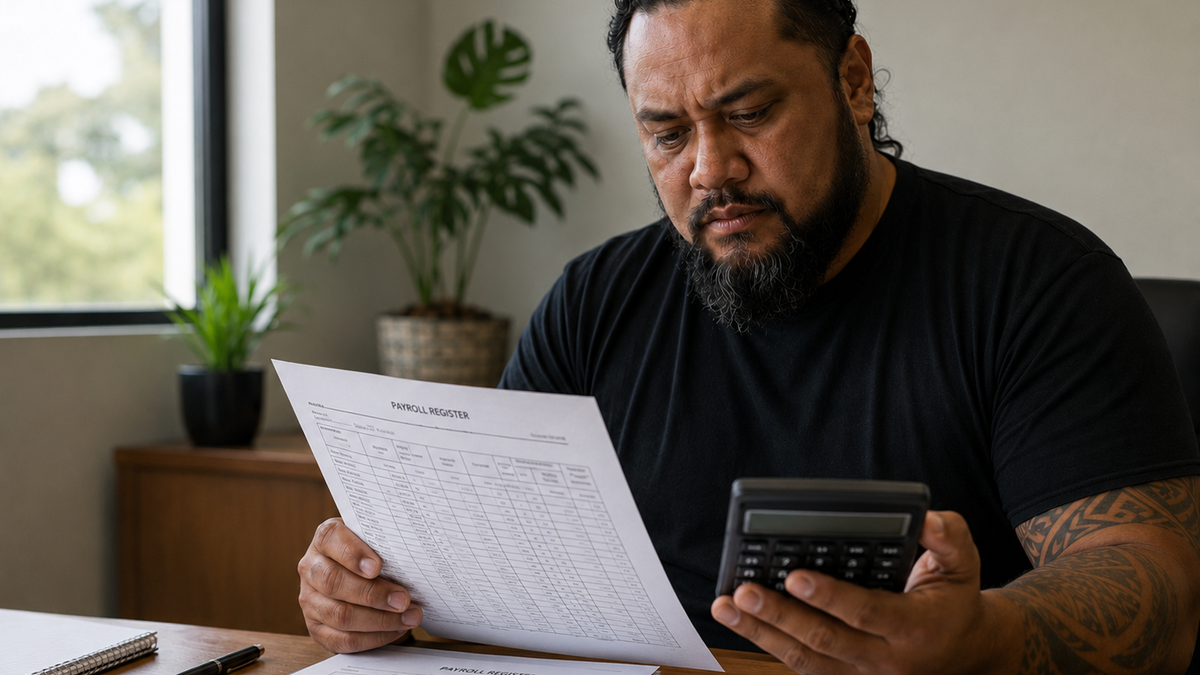
This is for the boutique cultivator running cash payroll who may be behind on federal deposits — the Form 941 obligations that are easy to defer when cash is tight and every other bill is also due. If that is you, the risk is not just that the business owes money. It is that the business's payroll-tax debt can become your personal debt, follow you past the closure of the company, and reach your personal assets. The mechanism is the Trust Fund Recovery Penalty under §6672, and the operators most exposed to it are exactly the ones least likely to know it exists — which is why it so often arrives as a surprise, in the form of a revenue officer's questions, rather than as a bill the business saw coming.
The two halves of payroll tax — and why one is different
Federal payroll tax comes in two parts, and the distinction is the whole game. The first part is the employer's own share — the business's half of FICA, plus FUTA. That is an ordinary business liability. The second part is the trust-fund share: the federal income tax you withhold from your employees' paychecks, plus the employees' half of FICA. That money is different in kind. It was never the business's money. You withheld it from your workers' wages and you hold it in trust for the IRS until you deposit it. When a business falls behind and "borrows" from that pot to pay rent or a vendor, it is not stretching its own cash — it is spending money that belongs to its employees and the government.
That is why §6672 exists. When a business fails to pay over the trust-fund share, the IRS can assess the unpaid trust-fund amount against any "responsible person" who willfully failed to pay it — personally. The penalty is measured by the trust-fund taxes themselves: the withheld income tax and the employee share of FICA that never got deposited. The employer share stays with the business; the trust-fund share can land on you.
Who counts as a "responsible person"
The term is broader than "owner." A responsible person is anyone with the duty and the authority to direct payment of the business's funds — owners, officers, check-signers, and sometimes bookkeepers or managers. It is a functional test, not a title test: it turns on who actually could have directed the money. "Willfulness" does not require bad intent — it means the person knew the taxes were unpaid and paid other creditors instead, or simply chose not to pay. In a small cultivation business, the owner is almost always a responsible person, and often the only one. If you sign the checks and you knew the 941 deposits were behind, the two elements the IRS needs are usually both present.
Why cannabis operators are especially exposed
Three things stack the risk in cannabis. First, cash payroll makes withholding harder to verify — if wages went out in cash without clean records, the deposits that should have followed are easy to fall short on and hard to prove after the fact — and when an examiner reconstructs your books from bank and POS records, under-deposited trust-fund taxes are one of the first things that surface. Second, the cash-flow pressure that comes with an operation squeezed by §280E — historically every dollar of ordinary deductions capped on the adult-use side, so margins run tight — leads straight to the textbook §6672 fact pattern: paying the landlord instead of the IRS because the landlord is the one who can lock the doors this week. (Under current law, qualifying medical activity now sits outside §280E, but the adult-use side and years of accumulated pressure do not disappear.) Third, the penalty is not dischargeable in bankruptcy. Closing the business or filing does not clear it — it can be assessed against the owner personally, and the IRS's collection tools, liens and levies, reach personal assets to satisfy it.
How the assessment actually happens
The §6672 process runs in a predictable order:
- The business falls behind on Form 941 deposits.
- An IRS revenue officer investigates and interviews the potential responsible persons — usually on Form 4180, the responsible-person interview.
- The IRS proposes the Trust Fund Recovery Penalty against the people it has identified.
- Each proposed responsible person has appeal rights — a pre-assessment conference and CAP appeal options.
- The penalty is assessed, and collection follows against the individuals.
The pivot point in that sequence is step two. The Form 4180 interview is where the IRS gathers the evidence it needs on both duty/authority and willfulness — and it is where unrepresented owners talk themselves into liability by "explaining" that of course they knew, and of course they decided what got paid.
The defense and relief paths
Being in the crosshairs is not the same as being liable. The real defenses go to the two elements:
- Contest responsible-person status — show you lacked the actual authority to direct which bills got paid.
- Contest willfulness — show you did not know the taxes were unpaid, or did not choose to prefer other creditors.
- Apportion the liability — identify the other responsible persons so the exposure is not parked entirely on you.
- Resolve the assessed amount — an installment agreement or, where the facts support it, an Offer in Compromise (I cover the collection-resolution paths in a companion guide).
- Penalty abatement for reasonable cause, where the facts support it.
And underneath all of it, fix the payroll-tax compliance that created the problem — a real cash-payroll deposit procedure — so you are not defending the same assessment again next year.
The checklist
- If you are behind on 941 deposits, get current now. Stopping the bleed is the first and most important move.
- Identify every potential responsible person and map the willfulness facts honestly, before the IRS does.
- Do not sit for a Form 4180 interview without representation. This is the single most important line in this article.
- If you are assessed, evaluate the CAP appeal and the apportionment and defense options with your representative.
- Address the underlying payroll-tax compliance so the exposure does not recur.
The mistake that creates the liability
The biggest §6672 mistake is not falling behind — it is talking to the revenue officer informally and "admitting" the responsible-person facts. The Form 4180 interview is evidence-gathering, full stop. It feels like a conversation; it functions like a deposition. Respond only with representation and a prepared position, because the difference between "responsible person" and "not liable" is often just which facts got said out loud, and to whom. Whether you are behind on deposits or a deadline is bearing down, treat those questions as ones to work through with a representative and, where the stakes call for it, counsel — not to answer off the cuff.
Start with the $375 allocation audit and a ten-minute fit call. If you're behind on payroll taxes or facing a §6672 interview, we triage immediately — confirm where the responsible-person exposure actually sits, prepare the defense, and protect you personally, not just the business.
Book the $375 audit→
Don't miss the next issue
Don't miss our next ripe issue, dropping — a fresh harvest of legal and operational insight to keep you green and growing. Subscribe below.
Subscriptions open soon.
This article is educational and does not constitute tax or legal advice. No client relationship is created by reading it. Federal cannabis scheduling and IRS guidance are changing rapidly in 2026; verify the current status before acting. For positions specific to your operation, engage under a signed representation agreement (Form 2848).